

2020 Philippine Holidays
On November 15, 2019, President Duterte passed Proclamation No. 845, which designates the Philippine holidays, specifically regular and special non-working days, for the year 2020.
2020 Philippine Holidays Read More »
On November 15, 2019, President Duterte passed Proclamation No. 845, which designates the Philippine holidays, specifically regular and special non-working days, for the year 2020.
2020 Philippine Holidays Read More »

A One Person Corporation (”OPC”) may be formed in the Philippines whereby the OPC is composed of a single stockholder who can only be a natural person, trust or estate. Its term of existence is perpetual but in case of a trust or estate, the term shall be co-terminous with the existence of the trust or estate.
A Guide on One Person Corporations in the Philippines Read More »

Approved by the President on August 22, 2019, Republic Act No. 11394 (RA 11394) makes its obligatory for all schools, both public and private, that makes use of armchairs in the classroom, to provide neutral desks to all students. RA 11394 even defined a neutral desk to mean “a table or an armchair that is suitable for both right-handed and left-handed students.” The law further required that at least ten percent (10%) of the student population be provided with neutral desks.
A Law for Left Handed-Students Read More »

In the Philippines, there is no requirement to register a franchising agreement. A Technology Transfer Arrangement need not be registered with the Intellectual Property Office if it complies with the mandatory provisions and does not contain any of the prohibited clauses. On the other hand, some countries require that the franchise agreement be registered and oftentimes updated annually. Parenthetically, since there is no law specifically addressed at franchising, there is also no government agency charged with regulating the business of franchising in the Philippines. Perhaps, it is about time that Congress enact a law on franchising to protect the legitimate players in such thriving industry.
An Unregulated Franchising Environment (updated October 2019) Read More »

Prompted by the heavily clogged dockets of the courts, the lack of magistrates and the seemingly inadequate number of courts to hear and decide the mounting scores of cases remain in the Philippine Judicial System, the Congress passed Republic Act No. 11459 otherwise known as the Judges-at-Large Act of 2019.
Temping in the Judiciary? Judges-at-Large Law Passed Read More »

With advancements in mobile technology, the average person can now record a documentary, or even an explosive exposé, merely using one’s mobile phone, with crystal clear picture and sound, that may even impress professionals. However, you must always be careful with who and what you record with your phone. Chances are, if you recorded a
On Video and Audio Recording using your Mobile Phone Read More »

In response to developments in technology and the ever-growing use of multiple forms of social media in the Philippines, Congress enacted Republic Act No. 10175, also known as the Cybercrime Prevention Act of 2012. Law Defining Cyber Libel R.A. 10175 deals with many crimes, including byber libel. Sec. 4(c)(4) of R.A. 10175 states: “(4) Libel.
Cyber Libel: Liability for Posting in Social Media Read More »

Antitrust/ Competition Law: Investigation of Administrative Cases involving Anti-Competitive Conduct before the Philippine Competition Commission* The Philippine Competition Commission (“PCC”) shall have original and primary jurisdiction over the enforcement and implementation of Republic Act No. 10667, otherwise known as the Philippine Competition Act (“PCA”).[i] It has the power to conduct inquiries and investigate, upon complaint
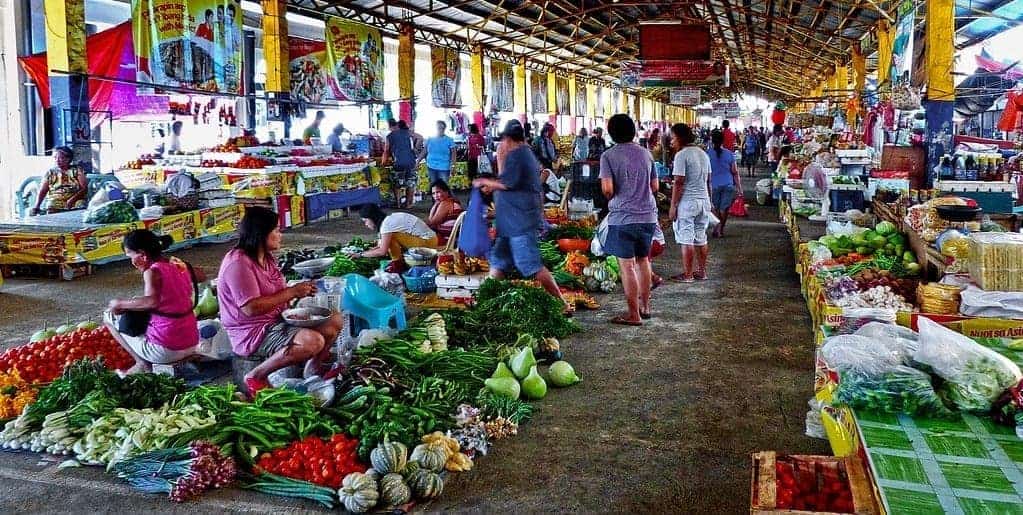
Antitrust/ Competition Law: Relevant Product Market and the Hypothetical Monopolist Test* Market definition is usually the first step in competition analysis because the concepts that will be used in the analysis occur in the market (i.e. market power, competition, statutory restrictions, etc.). Furthermore, defining the market is relevant in calculating and determining variables such
Antitrust/ Competition Law: Relevant Product Market and the Hypothetical Monopolist Test Read More »

Antitrust/ Competition Law: Vertical Restraints and Exclusive Dealing* A vertical agreement is an agreement or concerted practice entered into between two or more undertakings each of which operates, for the purposes of the agreement or the concerted practice, at a different level of the production or distribution chain, and relating to the conditions under which
Antitrust/ Competition Law: Vertical Restraints and Exclusive Dealing Read More »
