
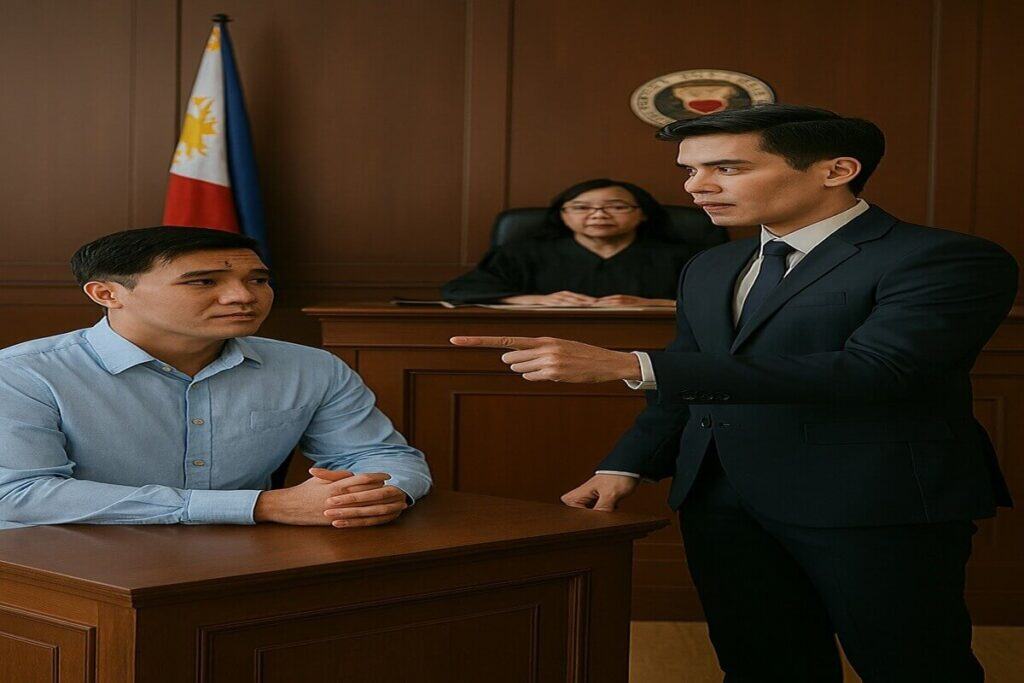
WHAT TO EXPECT IN PHILIPPINE COURT HEARINGS
For most people, the first time they enter a Philippine courtroom is stressful: unfamiliar language, strict rules, and fear of saying or doing the wrong thing. Yet the process is far less mysterious if you know what the law requires and how hearings usually unfold in practice.
This explainer walks through:
- The legal framework that governs hearings
- What “public hearings” and “trials in open court” really mean
- How a hearing typically proceeds in civil and criminal cases
- Special situations (in‑chambers hearings, depositions, perpetuation of testimony)
- Practical tips for litigants and witnesses
What actually happens in a hearing: typical flow
Below is a generalized picture; actual details vary by case type and judge.
A. Before the hearing date
- Filing and setting
- Party files a pleading (e.g., complaint, motion).
- The court issues an Order setting it for hearing, or schedules trial dates during pre‑trial.
- Notices/subpoenas are served on parties and witnesses.
- Preparation
- Lawyers prepare pre‑trial briefs, mark evidence, and line up witnesses.
- Litigants and witnesses are briefed on proper attire (long pants/skirts, closed shoes, no sleeveless shirts), respectful address (“Your Honor”), and basic courtroom etiquette.
B. On the day of hearing
Typical sequence in a regular court session:
- Calling the roll / calendar
The clerk calls cases one by one. Parties answer “Appear, Your Honor” through counsel. If a party or counsel is absent, the judge may:
- Proceed ex parte (in some civil matters)
- Declare a waiver (e.g., of right to present evidence)
- Dismiss the case (for failure to prosecute)
- Issue a show‑cause order or even a warrant (in criminal cases for an accused who skips arraignment or trial).
- Appearances and preliminary matters
Counsel state their appearances on record. The court may:
- Confirm the purpose of the setting (e.g., pre‑trial, arraignment, trial, motion hearing)
- Ask for updates (settlement, compliance with prior orders)
- Resolve pending incidents (e.g., motions, inhibitions, substitution of counsel).
- Hearing on motions
For motions requiring hearing, the moving party usually argues first, followed by the opposing party. Evidence is often documentary or by judicial notice, not live witness testimony, unless the motion raises factual questions (e.g., injunctions, suppression of evidence).
- Trial proper (if scheduled)
In a trial upon the merits, the structure is fairly standard:
- Criminal case
- Arraignment and plea (earlier stage).
- Prosecution’s evidence (direct, cross, redirect, re‑cross).
- Demurrer to evidence (optional).
- Defense’s evidence.
- Formal offer of evidence and objections.
- Memoranda (sometimes) and then decision.
- Civil case
- Plaintiff’s evidence (same order of examination).
- Defendant’s evidence.
- Rebuttal/sur‑rebuttal, if allowed.
- Formal offer of evidence.
- Memoranda and decision.
All of this must take place in open court because they are “trials upon the merits.”
End of hearing
The judge may:
- Resolve issues in open court (orally) and later issue a written Order; or
- Declare matters submitted for resolution and set a date for the release of a written Order or Decision.
Public hearings vs. in‑chambers proceedings
A. Public nature of hearings
As a default, any interested person can sit in the courtroom, observe, and inspect non‑confidential records. This embodies transparency and accountability.
Typical public proceedings:
- Arraignments
- Trials on the merits
- Promulgation of judgment
- Most motion hearings
B. When the public may be excluded
The judge may exclude the public when evidence “is of such nature as to require their exclusion in the interest of morality or decency.”
Examples (practical):
- Testimony of rape or child sexual abuse victims
- Graphic evidence in homicide cases
- Certain family law matters involving minors
The court may also order that records not be made public for similar reasons.
C. In‑chambers hearings
Under Rule 135, acts or proceedings other than trials on the merits may be done in chambers.
Typical in‑chambers matters (in practice):
- Bail applications
- Judicial affidavits or depositions in sensitive cases
- Conferences on implementation of judgments
- Approval of compromise agreements
Even in chambers, basic due process still applies: notice, opportunity to be heard, and impartiality.
V. Special procedures: perpetuation of testimony and depositions
Sometimes a party needs to preserve testimony even before a case is filed (e.g., a terminally ill witness) or while a case is pending (e.g., a witness leaving the country). The Rules of Court allow this via Rule 134 – Perpetuation of Testimony.
A. Petition to perpetuate testimony (before case is filed)
“A person who desires to perpetuate his own testimony or that of another person regarding any matter that may be cognizable in any court of the Philippines, may file a verified petition in the court of the province of the residence of any expected adverse party.”
— (Rule 134, Sec. 1, Rules of Court)
Elements of the petition:
The petition must show:
(a) that the petitioner expects to be a party to an action… but is presently unable to bring it;
(b) the subject matter and his interest;
(c) the facts to be established and reasons to perpetuate;
(d) names/description of expected adverse parties and addresses; and
(e) names and addresses of persons to be examined and substance of expected testimony.
After filing, the petitioner must serve notice and copy of the petition to each expected adverse party at least 20 days before the hearing, in the same manner as service of summons.
This is still a court hearing: the judge will hear objections, then authorize depositions if warranted. The preserved testimony may later be used in the actual case, subject to evidentiary rules.
B. Depositions and pre‑trial testimony (pending cases)
Even in ongoing cases, the Rules allow depositions to avoid witness unavailability and to expedite trials. Hearings on motions to take depositions may be held in court or chambers, depending on the judge’s preference.
Due process, rights, and limits during hearings
A. Right to be heard and due process
Applied to ordinary trials and hearings, due process generally requires:
- Notice of the hearing
- Real opportunity to present one’s side (through counsel, pleadings, and evidence)
- An impartial judge
- A decision supported by evidence and law
B. Administrative rules vs. statutory procedure
Some aspects of hearings are also touched by administrative issuances (e.g., DOJ circulars on inquest, BIR procedures, agency adjudication rules). However, the Supreme Court has consistently held that administrative rules cannot override or expand the law or the Rules of Court.
In Manila Peninsula Hotel, Inc. v. CIR, the Court reiterated:
“Administrative issuances must not override, supplant or modify the law but must remain consistent with the law they intend to carry out… courts will not countenance administrative issuances that override, instead of remaining consistent and in harmony with, the law they seek to apply and implement.”
— (Manila Peninsula Hotel, Inc. v. CIR, G.R. No. 229338, 2024)
So if an agency circular prescribes a “hearing procedure” inconsistent with the Rules of Court in a judicial proceeding, the court follows the Rules of Court and the Constitution, not the circular.
Similarly, Philippine Stock Exchange, Inc. v. Secretary of Finance clarifies that regulations that substantially increase burdens or require invasive disclosures must comply with constitutional requirements (notice, hearing, strict scrutiny for sensitive data). This underscores that procedural and substantive rights remain in play during quasi‑judicial and administrative hearings as well.
Practical examples and scenarios
A. Example 1: First time at a civil trial hearing
Scenario: You are a plaintiff in a collection of sum of money case. The court has set a pre‑trial and initial presentation of plaintiff’s evidence.
You can expect:
- The judge to attempt amicable settlement first.
- If no settlement, the judge will define the issues and mark your documents as exhibits.
- On the trial date, you (or your authorized representative) testify, following the judicial affidavits or your lawyer’s questions.
- The opposing counsel will cross‑examine you.
Practical tips:
- Review your documents and any judicial affidavit in advance.
- Answer questions directly and honestly; avoid volunteering information.
- Speak clearly, address the judge as “Your Honor,” and do not argue directly with opposing counsel.
B. Example 2: Sensitive testimony in a criminal case
Scenario: You are a private complainant in a sexual offense case. Before your testimony, your lawyer moves to exclude the public.
Under Rule 135, Sec. 2, the judge may grant the motion and clear the gallery “in the interest of morality or decency” while you testify. This is to protect your privacy and encourage candid testimony.
C. Example 3: Witness about to leave the country
Scenario: A critical witness for your future case is permanently migrating abroad, but you are not yet ready to file the complaint.
Your lawyer may file a verified petition to perpetuate testimony under Rule 134 in the proper court, showing the expected case, your interest, the facts to be established, and why the testimony needs to be preserved now. A hearing will be set with at least 20 days’ notice to the expected adverse party.
Basic do’s and don’ts for litigants and witnesses
Do:
- Arrive early; locate your courtroom and check the calendar.
- Dress modestly and neatly.
- Keep your phone on silent and avoid side conversations.
- Listen to your lawyer’s instructions; answer only the question asked.
- Stand when the judge enters/leaves, and when you address the court.
Don’t:
- Interrupt the judge or opposing counsel.
- Argue or get into personal disputes in the courtroom.
- Approach the bench or witness stand without permission.
- Bring weapons or prohibited items.
- Lie or speculate in your testimony.
Court hearings in the Philippines follow a structured, rule‑based process centered on openness, fairness, and efficiency. While each case has its own dynamics, the governing framework—the Rules of Court—creates predictable expectations for when, where, and how hearings occur.
For litigants and witnesses, understanding the sequence of a hearing, your rights to be heard, and the limits of administrative issuances over court procedure can significantly reduce anxiety and improve your ability to participate meaningfully in the process. When in doubt, consult counsel, prepare thoroughly, and remember that the courtroom is designed to be a forum where both sides can be heard under clear rules, not a black box.
04 January 2026
About Nicolas and De Vega Law Offices
Nicolas and de Vega Law Offices is a full-service law firm in the Philippines. You may visit us at the 16th Flr., Suite 1607 AIC Burgundy Empire Tower, ADB Ave., Ortigas Center, 1605 Pasig City, Metro Manila, Philippines. You may also call us at +632 84706126, +632 84706130, +632 84016392 or e-mail us at [email protected]. Visit our website https://ndvlaw.com.

